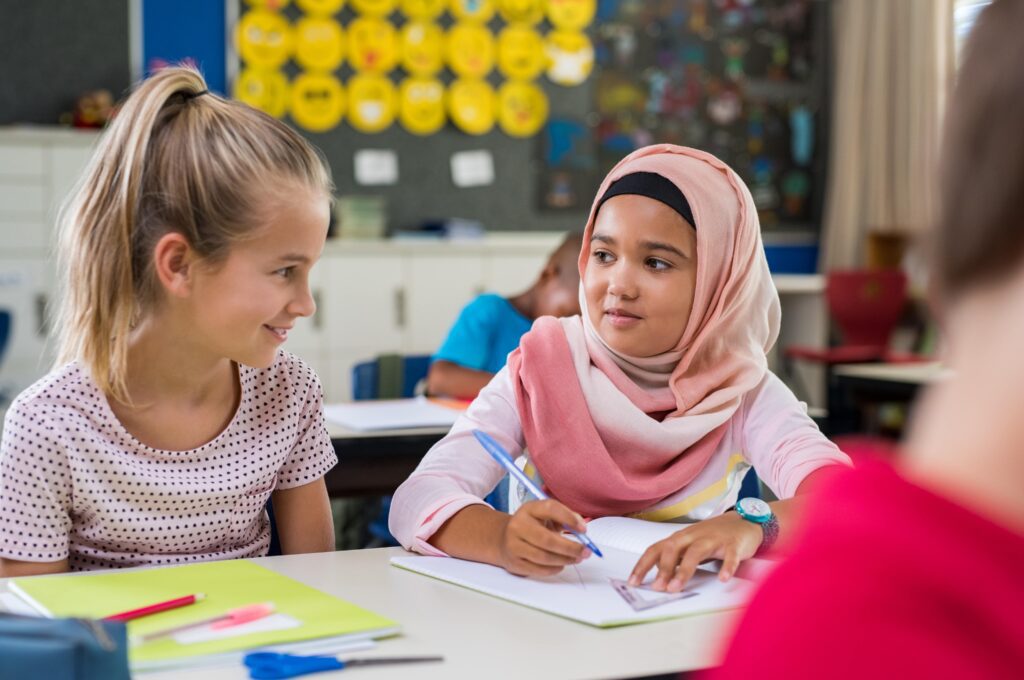
Nearly all students have now had a chance to experience online schooling in some form. Whether they joined an online school like iCademy Middle East in Dubai, or participated in their brick-and-mortar school’s version of blended learning, students and families have now seen the benefits and challenges of learning at home first hand. At iCademy, we fully understand that online learning is NOT the perfect solution for every single student. However, there are several circumstances where online learning can provide much-needed benefits. Some students struggle to get the help they need in a traditional setting. Online schooling may be the right choice for you and your family if you fit into any of the following categories.
You prefer a blended learning model
Due to the pandemic, many schools ended up adopting a hybrid learning model where students would attend school in-person part of the week, and complete lessons remotely during the other part. iCademy Middle East offers this option at our Knowledge Hub located in Dubai Knowledge Park. Families can choose the number of days per week they wish their students to attend and the other days, students complete online lessons. The benefit to this model is that students still get the flexibility of online schooling but also the social interaction that is a given in a traditional school. Students can still move at their own pace, and families can travel without disrupting the school year. It really is the best of both worlds!
Your student has special learning needs
Students with learning difficulties may find traditional school a challenge, especially if there is not an appropriate special education program available. An online curriculum allows students to work at the speed that is best for them, and teachers are willing to make accommodations for students as needed. At iCademy Middle East, we offer a specific blended-learning model designed with students of determination in mind. Students can move through their courses with help from our skilled learning coaches in-center, as well as participate in group activities and outings to work on social skills.
You need flexibility due to other commitments
Many of our students participate in extra-curricular activities, some at the professional level! iCademy is home to students who are nationally-ranked athletes and performing artists, as well as older students who opt to work or do professional-level internships during traditional working hours. The flexibility of online school allows them to continue their passions while ensuring that they are still getting a complete, accredited education and will graduate with a diploma that will take them to university.
*iCademy Middle East is an American curriculum online school that provides a comprehensive education to students based in the UAE and around the world. We are NEASC and KHDA accredited and provide individualized learning and instruction from grades K through 12.
Online schooling can be an adjustment at any age, but for young students who need a lot of hands-on help, it can be particularly tricky. You want students to learn independence, but they also need help staying on task. Here are a few tips to know when you are doing online learning in Kindergarten, or helping any young student new to online learning.
Manipulatives
Manipulatives are items that students can touch, play with, and otherwise use primarily in math. These are very useful to have handy when teaching math concepts, as well as to visualize stories and order of events. While many stores will try to sell you fancy plastic or wood “math manipulatives,” they can really be just about anything. You can use beans, beads, coins, legos, or anything else that you probably already have around the house!
Lots of Breaks
If you’ve ever spent more than an hour with a five-year-old, you know that focus is often in short supply. Developmentally, this is completely normal. However, it can drive parents and teachers a little crazy when you have a lot of work that needs to get done! Kindergarten teachers usually become pros at noticing when their students need to get the wiggles out, but a good rule to follow if you are learning at home is to take breaks every 20-30 minutes. This may seem like a lot, but students will usually come back refreshed and more focused, having had time to process some of what they just learned. Breaks should only be a couple of minutes to go to the bathroom, get a quick snack, and most importantly, move around.
Learn in lots of different ways
One of the benefits of learning at home is the flexibility for families and all the different options students have when it comes to how they learn. All students, but young ones, in particular, can benefit from the practical application of the skills they are working on and hands-on experiences. For Kindergarten or young students, this might mean practicing their handwriting and phonics by helping write the family’s shopping list. They can practice counting and simple addition using the items in the trolley. Then, language skills and following directions if they help to make dinner later. Kids often won’t even notice they are learning if they are also having fun. There are learning opportunities everywhere!
Prepare your day before your student starts working
The younger the student, the more involved the learning coach. Kindergarteners are still learning how to navigate a computer and many can’t read yet, so they need someone to guide them through their tasks. This will be a lot easier for you as a learning coach if you’ve oriented yourself to the lessons and know what you will be working on the day before. You will be able to guide your student smoothly through their work and have less downtime, which will help them stay engaged. For programs offered through accredited online schools, such as iCademy Middle East, this process is easy because the lessons are planned out at the beginning of the school year. Plus, you have online teachers available to give help and live lessons each week! This is an excellent way to organize your at-home learning and make it easier for you and your student.
Set a predictable schedule that you follow as often as possible
The flexibility of learning at home is a good thing. However, like all good things, it is possible to have too much. When you are learning at home, try to set a daily and weekly schedule that you feel confident you will be able to stick to the majority of the time. At iCademy Middle East, our courses are all organized with flexible due dates, pacing guides, and separate modules to help students and families work through their lessons at a comfortable pace.
Encourage independence and self-agency
Include your student in the planning. Ask them what they think is important to have a good school year, and what they feel they need to have fun while learning. Some things might not be realistic (they are five-year-olds after all), but incorporate their input where you can. Have your student help set up their learning area however they like. If they are excited to go to their study space that they helped set up, they will be more excited to learn!
*iCademy Middle East is an American curriculum online school that provides a comprehensive education and special programs to students based in the UAE and around the world. We are NEASC and KHDA accredited, and provide individualized learning and instruction from grades K through 12.
It finally feels like the end is in sight for many of us. COVID-19 has touched almost every aspect of our daily lives in one way or another, not the least of which has been how we teach our children. Online learning has been the go-to solution for nearly all schools during this very trying year. While for some it has been very difficult, for others online learning has opened a door to a completely new, more flexible method of education that will last.
Pandemic-era Remote Learning
At the end of the 2019 academic year, most schools were using online learning as a simple band-aid solution to finish off the last few months. It was a scramble for teachers and administrators alike to quickly find methods that were accessible for all students and allowed for actual teaching to happen. This led to some pretty mixed results. Traditional schooling is not meant for online delivery so for many teachers it felt like trying to jam a square peg into a round hole.
The start of the 2020-21 school year was even more daunting. Brick-and-mortar schools now faced the challenge of potentially forcing an entire year of academics online. Add to this the stress many families were going through, health-wise and economically, and you had a recipe for a fairly miserable year. Many families made the decision to turn to established online schools to gain some stability. Enter iCademy Middle East!
How iCademy is Different
Experience
iCademy Middle East has been operating as an online school for more than a decade. Many of our teachers are veterans of the system and well-practiced in online teaching. Our staff understands how to deliver lessons online in a way that is accessible and easy to navigate. iCademy’s method of online learning, while different from traditional education, still meets the same benchmarks and educational standards that students would receive in a brick-and-mortar school. iCademy Middle East is the only accredited online school in the Middle East region. Families know their students are getting a quality education.
Programs Specifically Formatted for Online Delivery
iCademy Middle East uses AMP (Accel Management Platform) and Canvas to deliver lessons. All of our courses are specifically designed to be taught online. This allows for increased flexibility in a student’s education, as well as assurance that all standards are being met.
Tailored Learning Options
iCademy Middle East may be an online school, but that doesn’t mean we are one-size-fits-all! We have many options available to help tailor the learning expereince for our students. Our Learning Center in Dubai Knowledge Village gives students personalized help. It also gives students the chance to interact socially with their classmates, much like a traditional school. We also offer virtual learning coaches who check in with students daily to help keep them on track. Students can choose how much independence and flexibility they need. We even offer options for students of determination.
While we fully recognize that online learning is not for everyone, iCademy Middle East provides a great alternative to traditional schooling. The pandemic may thankfully be coming to an end, but flexibility and freedom in education don’t have to! Contact us today to see how we can help!
*iCademy Middle East is an American curriculum online school that provides a comprehensive education to students based in the UAE and around the world. We are NEASC and KHDA accredited, and provide individualized learning and instruction from grades K through 12.
Are you looking for the best schools in Dubai for you or your child to pursue your educational dreams? In this blog post, we will explore the search for the best international schools in Dubai for foreign students, including in person and online options. We will cover topics like what makes a school great, how to find the right school for your child, and more.
What makes Dubai a great place to study?
Dubai is a vibrant and diverse city that is home to a thriving international community. This makes it an ideal destination for foreign students who are seeking to study in an international high school in Dubai. Private schools in Dubai have a reputation for providing high-quality education, with a wide range of curricula that cater to different nationalities and cultures.
Schooling for expats
Schooling in Dubai for expats is made easy by the fact that English is widely spoken, and many international high schools in Dubai offer English-language education, both in person and online. Dubai is also home to some of the best universities in the world, with a growing reputation for research and innovation.
Networking opportunities
Dubai’s status as a global business hub means that students who study in Dubai have access to a wealth of networking opportunities and internships. This can be particularly beneficial for those who are interested in pursuing careers in business, finance, or technology.
Overall, the combination of high-quality education, cultural diversity, and excellent opportunities for professional development makes Dubai an excellent choice for foreign students seeking to study in an international school in Dubai.
Factors to consider when choosing an international school in Dubai
When it comes to schooling in Dubai for expats, there are several factors to consider when choosing the right international school. Private schools in Dubai offer a range of educational programs, and it’s essential to consider which one would best suit your child’s needs. There are also exceptional online schooling options to consider.
Location
Location is a vital factor to consider when selecting a school. It is advisable to choose an institution located near your home or workplace. This makes it easy for you to drop off and pick up your child from school, and also reduces the travel time. Of course, online schooling options make this consideration unnecessary.
Cost and fees
Fees are also a crucial factor to consider when selecting an international school in Dubai. Private schools in Dubai vary in terms of fees, so it’s essential to have a budget in mind. Additionally, some schools offer scholarships and financial aid to students who excel academically or athletically.
Programme
Educational programmes are another crucial consideration when selecting an international school in Dubai. Some schools specialize in specific educational programmes, such as STEM or arts, while others offer a broader curriculum. Ensure that the school’s programmes align with your child’s interests and aspirations.
Class size
Class size is an essential consideration as well. Smaller class sizes mean that your child will receive more individualized attention from teachers, while larger classes provide more opportunities for socialization.
Accreditation
Accreditation is another vital factor to consider when selecting an international school in Dubai. Ensure that the school you select has a valid accreditation, as this ensures that it meets specific standards of quality education.
Environment and support
A supportive environment is also crucial. Select a school that offers a supportive environment for your child’s social and emotional development.
Extra-curriculars
Electives and athletics programs also play a significant role when choosing a school. Schools that offer a broad range of extracurricular activities can help your child discover new passions and skills.
Security
Safety is a top priority for parents. Ensure that the school has adequate security measures in place to guarantee the safety of your child.
Day schools or boarding facilities
The living environment should also be a consideration when selecting an international school in Dubai. Some schools offer boarding facilities, while others provide day-only options. Ensure that the school’s living environment suits your child’s needs and your preferences.
Finally, consider the level of parent involvement in the school’s activities and decision-making. Select a school that encourages parents’ participation in the educational journey of their children.
Top five international schools in Dubai for foreign students
Dubai is home to many world-class international schools that cater to the diverse needs of foreign students. Here are some of the best international schools in Dubai that offer excellent academic programs, top-notch facilities, and an international student community:
iCademy Middle East
One of the best examples of online schooling in the Dubai is iCademy Middle East. Catering to students in grades K-12, iCademy Middle East provides an accredited American education and offers students access to a wide range of courses and resources. Based in Dubai, iCademy Middle East enrolls students from across the globe, and students interact with teachers and classmates through its digital platform. iCademy also offers interactive textbooks, videos, quizzes, and discussion forums that enhance the learning experience.
iCademy Middle East is NEASC accredited and KHDA licensed.
Dubai International Academy
Dubai International Academy is a top-rated school that offers the International Baccalaureate program. The school provides a comprehensive education to students from over 80 nationalities, focusing on both academics and extracurricular activities. The facilities are modern and state-of-the-art, making the learning environment conducive to students’ success.
Jumeirah English Speaking School
Jumeirah English Speaking School is an outstanding British curriculum school that caters to children from nursery to year 13. The school’s academic programs are challenging, and students benefit from an exceptional range of extracurricular activities. The school’s outstanding facilities provide a nurturing and engaging learning environment.
GEMS Modern Academy
GEMS Modern Academy is a highly respected international school that offers a holistic education for students from KG to year 12. The school’s facilities are impressive, with cutting-edge classrooms, libraries, sports facilities, and technology resources. Students are offered a wide range of extracurricular activities that complement their academic studies.
Dubai American Academy
Dubai American Academy is a premier international school that provides a rigorous American curriculum education. The school has a diverse community of students from over 75 countries, and its academic programs are known for their high standards. The school’s excellent facilities include state-of-the-art science labs, an indoor track, and a 600-seat theater.
Emirates International School
Emirates International School is a highly regarded international school that offers a comprehensive education to students from KG to year 13. The school’s curriculum is based on the International Baccalaureate program, and its academic standards are exceptionally high. The school’s facilities are modern and equipped with the latest technology.
Frequently asked questions
What are the top international schools in Dubai for foreign students?
Some of the top international schools in Dubai for foreign students include iCademy Middle East, Dubai International Academy, Jumeirah College, Emirates International School, GEMS Wellington International School, and Dubai American Academy.
What is the KHDA rating system?
The KHDA rating system is a grading system used by the Knowledge and Human Development Authority (KHDA) in Dubai to evaluate the quality of schools in the emirate. Schools are given ratings ranging from Outstanding to Unsatisfactory.
What type of curriculum do international schools in Dubai offer?
International schools in Dubai offer a variety of curricula including the International Baccalaureate Program, American curriculum, British curriculum, Indian curriculum (CBSE), and others.
How much are tuition fees for international schools in Dubai?
Tuition fees for international schools in Dubai vary depending on the school, grade level, and curriculum. On average, tuition fees can range from AED 50,000 to AED 100,000 per year.
What are the admission requirements for international schools in Dubai?
Admission requirements for international schools in Dubai vary depending on the school. However, most schools require students to submit their academic transcripts, passport copies, and proof of residency.
What nationalities are represented in international schools in Dubai?
International schools in Dubai have a diverse student body with students from various nationalities. Some of the nationalities represented include British, American, Indian, Pakistani, Emirati, and many others.
What is the International Baccalaureate Program?
The International Baccalaureate Program (IB) is an internationally recognized education program that focuses on developing the whole student. The program offers a rigorous and comprehensive curriculum that prepares students for college and beyond.
What is the American curriculum?
The American curriculum is an education program that is based on the education system in the United States. The curriculum focuses on core subjects such as English, math, science, and social studies and emphasizes critical thinking, creativity, and problem-solving.
If you’re an expat family living in Dubai, your child’s education is likely a top priority. Fortunately, Dubai is home to some of the best international schools in the world that cater to the needs of expat families.
International schools in Dubai like iCademy Middle East offer a diverse range of curriculum options, outstanding facilities, and extracurricular activities to provide a holistic learning experience. Additionally, these schools have a robust support system in place to help expat students and their families navigate the admissions process and settle into their new educational environment.
Why Choose Dubai for Expat Education?
If you’re considering moving to Dubai as an expat family, you’ll be glad to know that the city has become a popular destination for those seeking quality education for their children. Dubai offers a unique and diverse educational experience, which has attracted families from all over the world.
The education system in Dubai is well-established, with a range of international schools and universities offering high-quality education and world-class facilities. Whether you are looking for British, American, or other international curricula, Dubai caters to all preferences. For example, iCademy Middle East is an American online school that has been based in Dubai for nearly 20 years.
Moreover, Dubai provides a multicultural environment that encourages cultural integration and diversity, providing a rich educational experience for expat children.
By choosing Dubai for your child’s education, you can ensure that they receive a top-class education while also giving them the opportunity to experience a new culture and environment.
Why Choose Dubai for Expat Education?
Dubai offers a range of benefits for expat families seeking education:
High-quality education
World-class facilities
Diverse and inclusive environment
Cultural integration opportunities
Opportunities for extracurricular activities
Comprehensive support services for expat students
With these benefits and more, Dubai is an excellent choice for expat families seeking quality education for their children.
Premier Educational Options in Dubai
Dubai is home to some of the best schools in the world, providing a top-quality education that caters to expat families. The city has a diverse range of international schools that offer various curriculum options, making it easier for parents to choose an educational program that aligns with their child’s needs.
Best Schools in Dubai for Expats
Dubai has no shortage of top-rated schools that provide an excellent educational experience for expat children. Among the best schools are iCademy Middle East, GEMS Wellington International School, Dubai American Academy, and Dubai International Academy. These schools offer a range of international curricula, including the International Baccalaureate (IB), the American curriculum, and the British curriculum.
International Curriculum Schools in Dubai
International curriculum schools in Dubai offer a diverse range of educational programs that cater to students from various cultural backgrounds. These schools follow an international curriculum, such as the IB or American curriculum, and provide students with a broad range of subjects and extracurricular activities. Some of the top international curriculum schools in Dubai include iCademy Middle East, Dubai International Academy, GEMS Wellington International School, and The American School of Dubai.
Top-Rated Schools in Dubai for Expats
Dubai has many top-rated schools that provide an exceptional educational experience for expat children. These schools are known for their high academic standards, excellent facilities, and diverse extracurricular activities.
Dubai offers a wide range of educational options for expat families, making it easier to choose a school that aligns with your child’s needs and preferences. Whether you prefer an international curriculum or a school that follows the American or British curriculum, there are plenty of options to choose from.
American Curriculum Schools in Dubai
For expat families from the United States, an American curriculum school in Dubai, such as iCademy Middle East, can provide a familiar education system for their children. These schools follow the same curriculum as schools in the United States, including the Advanced Placement program.
One of the advantages of choosing an American curriculum school in Dubai is the focus on critical thinking and problem-solving skills. The curriculum is designed to prepare students for higher education in the United States and other English-speaking countries.
Many American curriculum schools in Dubai also provide a wide range of extracurricular activities and sports programs that promote a holistic approach to education. These activities can help students develop leadership skills, build friendships, and discover new interests.
British Curriculum Schools in Dubai
If you are an expat family from the UK looking for a familiar educational system, Dubai has several reputable British curriculum schools to choose from. These schools follow the UK system of education and offer a comprehensive learning experience to students of all ages.
Choosing a British curriculum school in Dubai provides many benefits, including a smooth transition for UK expat families and the opportunity to pursue further education in the UK. These schools follow a rigorous and internationally recognized curriculum that prepares students for higher education and future career opportunities.
Understanding Dubai School Fees
When considering international schools in Dubai, it’s essential to factor in the cost of education. School fees can vary depending on the curriculum, facilities, and location of the school. As an expat family, it’s crucial to budget for schooling expenses and plan accordingly.
International school fees in Dubai can range from AED 19,000 to AED 100,000 per academic year. These fees typically cover tuition, books, and other learning materials. However, additional fees such as transport, uniforms, and extracurricular activities may also apply, depending on the school. iCademy Middle East fees are structured based on grade, and the school is among the more affordable international school offerings for expats in Dubai.
The fees for international schools in Dubai are usually paid in three instalments per year. Some schools may offer discounts for early payment or a reduction in fees for sibling enrolment. Be sure to contact the school for specifics.
It’s worth noting that the fees for international schools in Dubai are generally higher than those of local private schools. This is due to the level of education, facilities, and resources available at international schools.
If you’re concerned about the cost of education, you might consider applying for scholarships or financial aid programs offered by some international schools. However, these opportunities are limited and highly competitive, so it’s essential to research and plan in advance.
Navigating the Dubai School Admissions Process
If you’re an expat parent in Dubai, you’ll want to make sure that you understand the school admissions process so that you can find the right school for your child.
The admissions process for international schools in Dubai can be competitive, so it’s important to start the process early. Most schools require you to submit an application along with supporting documents such as transcripts and references. You may also need to schedule an admissions test or interview.
Each school has its own admissions criteria, so it’s essential to research each school’s requirements before applying. Some schools may require a certain level of academic achievement, while others may place a greater emphasis on extracurricular activities or language proficiency.
The admissions process for iCademy Middle East is a four-step process:
1) consultation with an enrollment counselor
2) completing an application form,
3) submitting the required compliancy documentation, and
4) paying tuition fees. A placement conference is conducted to make course recommendations for students once they are enrolled.
One factor that can affect your child’s chances of acceptance is availability. Some schools may have a waiting list, so it’s important to apply to multiple schools to increase your chances of acceptance.
Once your child has been accepted, you’ll need to complete the registration process, which may require you to pay fees and provide additional documentation such as medical records and residency visas.
It’s important to note that the admissions process for international schools in Dubai can be overwhelming for expat parents. Seek guidance and support from school admissions counselors or educational consultants to ensure a smoother process.
Extracurricular Activities and Facilities
When it comes to choosing the best school for your child in Dubai, along with a quality education, it’s essential to consider extracurricular activities and facilities offered by the school. Many international schools in Dubai have a wide range of extracurricular activities that cater to various interests and skill levels of students.
Facilities offered by schools in Dubai are top-notch and are designed to provide students with the best learning environment possible. Schools with state-of-the-art facilities have an edge in providing a well-rounded educational experience for students.
Extracurricular activities
Facilities
Sports (football, volleyball, basketball, etc.)
Music (choir, instrumental, etc.)
Dance
Drama and Theater
Debate and Public speaking clubs
Community service clubs and activities
Science labs
Art and Design studios
Swimming pools
Playgrounds
Libraries
Gymnasiums
Extracurricular activities and facilities offered by schools in Dubai play a significant role in the development of students. They provide opportunities for students to explore their talents and passions beyond the classroom, which is crucial for their overall growth and development.
Online schools like iCademy Middle East offer local trips and events, summer school, separate music program, college counseling, and a strong community of students around the globe.
Support for Expat Students
If you are an expat family moving to Dubai, you may be concerned about how your child will adjust to a new school and culture. International schools in Dubai understand this and offer a range of support services to help students thrive.
One of the main advantages of attending an international school is that it provides a diverse environment where students from different backgrounds can learn together. This can be especially beneficial for expat children, as they have the opportunity to make friends from around the world and gain a deeper understanding of different cultures. Schools often organize cultural events and activities to promote this type of learning and encourage participation from all students. For example, iCademy Middle East students enjoy cultural and education trips to the Abu Dhabi Grand Mosque, Sharjah Wildlife Center, and Dubai’s Bastakiya, as well as online clubs and social events.
In addition, international schools in Dubai typically have dedicated support staff who can assist expat students in their transition to a new environment. This may include counseling services, language support, and orientation programs. Some schools also offer extracurricular activities specifically designed for expat students, such as clubs and sports teams, to help them integrate into the school community.
If your child has specific learning needs or requires extra support, many international schools in Dubai offer a range of resources to help. This may include special education services, tutoring, or accommodations for students with disabilities. iCademy Middle East students have the support of dedicated online teachers and learning coaches.
Overall, international schools in Dubai understand the unique challenges faced by expat families and are committed to providing a supportive and inclusive environment for all students. With these resources and support services in place, your child can have a successful and fulfilling educational journey in Dubai.
Parental Involvement and Communication
As an expat parent, staying involved in your child’s education is crucial to ensure their success. International schools in Dubai place a high value on parental involvement and communication, recognizing that it takes a village to raise a child.
When choosing an international school for your child, consider how the school promotes parental involvement. Look for communication channels that keep you informed about your child’s progress, such as regular parent-teacher conferences, newsletters, and online portals. Many schools also have parent associations that offer opportunities for involvement and volunteering.
It’s important to establish a positive relationship with your child’s teacher, as they can provide valuable insights into your child’s learning style and progress. Regular communication with your child’s teacher can help you support your child’s education at home and address any concerns or challenges that may arise.
Parents of iCademy Middle East students are actively involved in their students’ education in the role of Learning Coach, who acts as the point of contact for the school and works directly with students to ensure success.
By actively participating in your child’s education, you demonstrate the importance of learning and show your child that you are invested in their academic journey. This involvement can also help your child feel more connected to their school and community, and ultimately lead to greater success in their studies.
Cultural Integration and Diversity
One of the advantages of studying at international schools in Dubai is the opportunity to experience cultural integration and diversity. These schools welcome students from all over the world, creating a multicultural environment that fosters respect and understanding.
By attending school with children from different backgrounds, your child can broaden their perspective and gain a deeper understanding of different cultures. They can learn to appreciate differences and similarities, and develop skills that will benefit them in the future.
The curriculum in international schools in Dubai often includes cultural activities and events that celebrate diversity. These activities can include food festivals, dance performances, and cultural exhibitions. By participating in these events, students can learn about different traditions and customs, and have fun while doing so!
Teachers in international schools in Dubai are trained to address cultural differences and promote an inclusive learning environment. They encourage students to share their experiences and perspectives, creating a safe space for open communication and learning.
Online schools like iCademy Middle East are able to offer an especially broad international cultural experience, with students from around the globe interacting on a daily basis.
Overall, international schools in Dubai offer a unique educational experience that emphasizes cultural integration and diversity. By attending one of these schools, your child can gain valuable skills that will help them succeed in an increasingly global world.
Dubai offers a range of top international schools for expat families looking for quality education. Whether you prefer an American or British curriculum, Dubai’s educational options are diverse and cater to the needs of expat children. The city’s schools have a comprehensive admissions process and support services in place, making the transition to a new school in Dubai a seamless experience.
Remember to consider the fees associated with international schools in Dubai and budget accordingly. Take advantage of the extracurricular activities and facilities offered by these schools to provide your child with a holistic learning experience beyond the classroom. Make use of the support services provided by schools in Dubai to help your child thrive in a new cultural environment.
Finally, it is worth noting that international schools in Dubai are committed to promoting cultural integration and embracing diversity. These schools employ inclusive educational practices that foster an environment of acceptance and understanding. By enrolling your child in an international school in Dubai, you are giving them the opportunity to learn from and interact with people from different cultures and backgrounds, which can be an enriching experience that will shape their worldview.
Get in touch with us at iCademy Middle East to find out more about our online American school, our community and culture, and our admissions process. We offer expats in Dubai the experience and quality of traditional schooling with the flexibility today’s students need.
If you are an expat living in the UAE/GCC region with school-age children, you may be wondering about the education system available to them. Fortunately, the UAE/GCC provides a diverse and inclusive learning environment that caters to the needs of expat students.
Curriculum Options
Firstly, let’s look at the curriculum options available for expat students in the region. The UAE/GCC offers a variety of curricula, from international schools to the local UAE and GCC programs.
International schools in the UAE/GCC often follow globally recognized educational frameworks such as the International Baccalaureate (IB) or British Curriculum. These curriculums provide a broad range of subjects and prepare students for a successful future, both academically and culturally.
The UAE curriculum is designed to align with international education standards and focuses on Arabic, Islamic studies, and UAE social studies. Expats students can take Arabic as a second language and can study other subjects in either English or Arabic.
The GCC curriculum is similar to the UAE curriculum, with a focus on Arabic, Islamic studies, and social studies, and is taught in Arabic. However, the GCC curriculum also includes subjects like science and math in English.
Non-native students studying in UAE/GCC schools have unique considerations, including language barriers and cultural differences. Schools in the region provide language support programs, cultural integration initiatives, and support services to help expat students thrive academically and socially.
Overall, the UAE/GCC education system provides ample opportunities for expat students to receive a quality education and be prepared for their future academic and professional endeavors.
International School Curriculums in UAE/GCC
When it comes to providing top-notch education to expat students in the UAE/GCC region, international schools are a popular choice among parents. These schools offer a diverse range of curriculums, often following globally recognized educational frameworks that prepare students for a successful future both academically and culturally.
International schools in UAE/GCC cater to students from different cultural backgrounds and provide a multicultural learning environment. This not only helps students gain a broader worldview but also enhances their communication skills and approaches to problem-solving.
Some of the best curriculums for expat students in UAE/GCC include:
Curriculum
Description
International Baccalaureate
A globally recognized curriculum that promotes critical thinking, academic rigor, and cultural awareness
British Curriculum
A comprehensive curriculum that emphasizes language and literacy, problem-solving, and creative thinking
A curriculum that focuses on inquiry-based learning, critical thinking, and hands-on experiences
Indian Curriculum
A curriculum that emphasizes academic excellence, cultural and moral values, and lifelong learning
International schools in UAE/GCC often offer a wide range of extracurricular activities, including sports, arts, and community service programs that provide students with a platform to explore their interests and talents. These activities complement the academic curriculum and contribute to the holistic growth of the students.
Whether you are looking for an academic curriculum that aligns with your home country’s educational framework or seeking a curriculum that offers a global perspective, international schools in UAE/GCC provide several options to choose from.
UAE Curriculum for Expat Students
When it comes to choosing the best curriculum for your expat child in the UAE/GCC, it’s important to consider the UAE curriculum options available. The UAE curriculum is designed to align with international education standards and focuses on the core subjects of English, Math, Science, and Arabic language and culture.
The Ministry of Education oversees the UAE curriculum and ensures that it caters to the needs of non-native students. The curriculum includes language support programs and cultural integration initiatives to help expat students succeed academically and socially.
The UAE curriculum for expat students includes a strong emphasis on digital literacy, innovative thinking, and problem-solving skills. Teachers use a variety of teaching methodologies, including project-based learning and experiential learning, to engage students and foster their creativity.
The UAE curriculum also offers a range of extracurricular activities, including sports, arts, and community service programs, to encourage student’s holistic growth and provide a well-rounded education.
GCC Curriculum for Expat Students
For expat students studying in the UAE/GCC region, the GCC curriculum is an option worth considering. The curriculum is designed to cater to the needs of non-native students and prepare them for future education or careers.
The GCC curriculum shares similarities with other international curricula, but also has its unique aspects. For instance, Arabic language and Islamic studies are integral parts of the curriculum, reflecting the cultural and religious values of the region.
Students in the GCC curriculum study a range of subjects, including math, science, social studies, and languages. The curriculum aims to develop critical thinking, problem-solving, and communication skills, as well as instill a sense of cultural awareness and appreciation.
Some reputable schools in the UAE/GCC region offer the GCC curriculum, and it may be a good fit for expat students looking for a well-rounded education that reflects the local culture and values. However, it’s essential to research schools and curriculums thoroughly to determine the best fit for your child’s academic and personal needs.
Schools for Expat Students in UAE/GCC
Choosing the right school for your expat child in the UAE/GCC region is crucial for setting them up for academic and social success. Several factors must be considered when selecting a school, including location, curriculum, extracurricular activities, and facilities.
International schools are popular among expat families because they offer globally recognized curriculums such as the International Baccalaureate, American, British, and French curriculums. These schools provide a multicultural environment, with students from various nationalities, making it a great option for children to develop cross-cultural skills.
UAE and GCC curriculum schools follow the national curriculums, with the latter being unified for all GCC countries. These schools offer a blend of traditional and modern teaching methodologies and focus on developing Arabic language proficiency, Islamic values, and national identity along with other subject areas.
Specialized schools cater to children with specific needs, such as those with learning disabilities, gifted children, and those interested in pursuing a particular field such as sports, arts or science. These schools provide a tailored learning environment to meet the individual needs of each student.
It is essential to research thoroughly and visit schools to assess whether they are the right fit for your child before making a decision. The UAE/GCC region provides a supportive learning environment for non-native students, and schools offer language support programs, cultural integration initiatives, and support services to help students adjust and thrive.
Choosing the right school for your child will provide them with a strong foundation for their educational journey and contribute to their overall growth and development.
UAE/GCC Education for Non-Native Students
As a non-native student studying in the UAE/GCC, it’s natural to have concerns about fitting in and succeeding academically. Fortunately, schools in the region understand the unique needs of expat students and provide a range of support services to help them thrive.
Language support programs are often available to help non-native students develop their English skills and better understand the curriculum. Cultural integration initiatives are also common, helping students adapt to their new environment and understand the local customs and traditions.
Schools in the UAE/GCC also provide various support services to ensure the academic success of their non-native students. These may include additional tutoring or counseling services, personalized learning plans, and small-group instruction.
The curriculum options available to non-native students in the UAE/GCC are typically designed to be inclusive and diverse. This often means incorporating elements of both international and local curriculums to provide a well-rounded education. As a result, expat students are exposed to a variety of cultural perspectives and ideas.
Overall, schools in the UAE/GCC strive to create supportive learning environments that cater to the unique needs of non-native students. By providing language support, cultural integration, and a diverse and inclusive curriculum, they help expat students succeed academically and feel at home in their new surroundings.
Supporting Your Child’s Educational Journey in UAE/GCC
Choosing the right curriculum for your child is just the beginning of their educational journey in the UAE/GCC region. As an expat parent, you can support your child’s academic success and overall well-being in a number of ways.
Engage with Your Child’s School
One of the most important ways you can support your child’s education is by actively engaging with their school. Attend parent-teacher conferences, stay informed about upcoming events and initiatives, and communicate regularly with your child’s teachers to ensure they are receiving the support they need.
Create a Nurturing Environment at Home
Encourage a love for learning at home by providing a nurturing environment that fosters curiosity, creativity, and critical thinking. Set aside time for homework and reading, encourage your child to explore their interests, and provide opportunities for them to learn and grow outside of the classroom.
Take Advantage of Additional Resources
Many schools in the UAE/GCC offer additional resources and enrichment opportunities to support the academic and personal development of their students. From tutoring services to leadership programs, take advantage of these resources to help your child thrive.
Stay Connected with Other Parents
Connect with other expat parents to share experiences and insights into the curriculums and schools in the region. Join parent-teacher organizations, attend school events and activities, and take advantage of online forums and social media groups to build a supportive community.
Encourage Cultural Integration
As an expat student in the UAE/GCC, your child has the opportunity to learn and grow in a multicultural environment. Encourage cultural integration by exploring the region’s diverse traditions, languages, and customs with your child. Support their social development by connecting with other families from different backgrounds and cultures.
By taking an active role in your child’s educational journey, you can help them achieve academic success and thrive in the UAE/GCC region. Remember to stay informed, engaged, and supportive to ensure your child receives the best education possible.
Extracurricular Activities and Enrichment Programs for Expat Students
Expat students in UAE/GCC schools have access to a diverse range of extracurricular activities and enrichment programs that enhance their educational experience and promote their holistic growth. These activities and programs provide opportunities for students to develop their skills and interests outside of the classroom, make new friends, and build their confidence.
Some of the most popular extracurricular activities for expat students include sports, music, drama, debate, and community service. UAE/GCC schools offer a wide variety of sports programs, including football, basketball, volleyball, swimming, and track and field. Music and drama programs allow students to explore their creative talents and perform in concerts and productions throughout the year. Debate teams and speech clubs enable students to improve their public speaking skills and participate in regional and international competitions. Community service clubs and initiatives provide opportunities for students to give back to their local communities and develop a sense of social responsibility.
Enrichment programs are also available to expat students, with options ranging from language classes to leadership development programs. Many schools offer language support programs to help students improve their English skills and better integrate into the school community. Leadership development programs enable students to develop their leadership skills and prepare for future academic and career opportunities. Other enrichment programs include coding and robotics classes, entrepreneurship workshops, and environmental sustainability initiatives.
By participating in extracurricular activities and enrichment programs, expat students in UAE/GCC schools can broaden their horizons, explore new interests, and develop essential life skills. Schools in the region are committed to providing a well-rounded education that prepares students for success both academically and personally.
Emerging Trends in UAE/GCC School Curriculums for Expat Students
As the UAE/GCC education system continues to evolve, there are several emerging trends that are shaping the curriculums offered to expat students. These trends are ensuring that the region’s education system remains competitive and at par with international standards.
Integrating Technology into Education
The integration of technology into education has become a key trend in UAE/GCC school curriculums for expat students. Schools are investing in the latest technology to enhance the learning experience of students to make it more engaging, interactive, and immersive. The use of smartboards, tablets, and other digital tools is becoming more prevalent in classrooms across the region.
STEM Education
The focus on STEM (Science, Technology, Engineering, and Mathematics) education is another emerging trend. The UAE/GCC region is prioritizing the development of a skilled workforce in these fields, which are essential for the growth of technology and innovation sectors. STEM education is being integrated into curriculums at all levels to help students develop the necessary skills to succeed in these fields.
Personalized Learning
Personalized learning is also gaining traction in UAE/GCC school curriculums for expat students. Schools are recognizing that students have different learning styles and needs. As a result, they are adopting personalized learning approaches that cater to each individual student’s interests, abilities, and learning pace.
Environmental Sustainability
The UAE/GCC region is committed to promoting environmental sustainability, and schools are reflecting this in their curriculums. Environmental education is being integrated into all subjects, and students are encouraged to take up eco-friendly initiatives. Schools are also promoting life skills that are essential for creating a sustainable future, such as gardening, waste segregation, and conservation practices.
Dual-Language Education
The UAE/GCC is a multicultural region, and language is a significant aspect of its diversity. As such, dual-language education is an emerging trend in school curriculums. Schools are offering bilingual programs that cater to students from diverse linguistic backgrounds. These programs aim to promote linguistic and cultural diversity and prepare students for life in a globalized world.
Collaborative Learning
Collaborative learning is becoming more popular in UAE/GCC school curriculums for expat students. Schools are recognizing that students need to develop collaborative skills to work effectively in teams. They are integrating group projects, collaborative assignments, and peer-to-peer learning into their curriculums to help students develop these skills and prepare them for the workforce.
The evolving trends in UAE/GCC school curriculums are ensuring that expat students receive a world-class education that prepares them for the future. It’s important to consider these trends when selecting a curriculum for your child to ensure that they receive a well-rounded education that meets their individual needs and prepares them for success.
Conclusion
Choosing the right curriculum for your expat child studying in UAE/GCC schools is crucial for their academic and personal growth. As you have learned throughout this article, there are several curriculum options available, each with its own advantages and unique features.
Remember to consider your child’s academic goals, cultural background, and personal interests when selecting a curriculum. Engage with schools, participate in extracurricular activities, and provide a supportive learning environment for your child’s success.
Stay informed of emerging trends and innovations in UAE/GCC school curriculums and seek input from other expat parents. With the right curriculum and support, your child’s educational journey in the UAE/GCC region can be enriching and fulfilling.
In the last 20 years, the Internet has grown from being nearly non-existent into the largest, most accessible database of information ever created. It has changed the way people communicate shop, socialize, do business, and think about knowledge and learning. Much more than just a new twist on distance learning, online schooling is changing the face of traditional classrooms and making education more accessible than ever before.
Online education is a form of education where students use their home computers through the Internet. For many nontraditional students, among them all those who want to continue working full time or raising families, online graduations and courses have become popular in the past decade. Often online graduation and course programs, some of which are conducted using digital technologies, are provided via the online learning portal of the host university.
When used to its full potential, online education has been shown to be more effective than pure face-to-face instruction. It can be engaging, fun, and tailored to fit almost anyone’s schedule.
Online education has become a viable and exciting method for instructional delivery in the global business society that runs on a 24/7 schedule (24 hours a day/7 days a week) because it provides students with great flexibility.
With the increased availability of the Internet and computer technology, students are able to access information anytime and anyplace that would normally be available only through a traditional classroom. Studies have shown that students learn just as effectively in an online classroom as they do in a traditional classroom.
Online education offers many positive benefits since students:
Have flexibility in taking classes and working at their own pace and time
face no commuting or parking hassles
learn to become responsible for their own education with information available at their fingertips
find the submission of assignments easy and convenient
are more apt to voice their own opinions and share and debate issues with other students, as well as learn from other students during the group discussions
Possible negative effects of learning online are that some students:
may miss the face-to-face interaction with the instructor and among students
may prefer to attend traditional classes with an instructor who teaches and guides them through the course
find access to the necessary technology challenging and the availability of technical support limited
Many students prefer the online classroom since it offers flexibility in their busy schedules. With the proliferation of information and knowledge, students must become lifelong learners in today’s world, and online education plays an important role in helping individuals access the learner-centered and self-directed instruction.
With enhanced software, hardware, and Internet access, more options for online education will become available. With student enrollments increasing faster than classrooms can be built, students becoming more proficient with technology, and students pursuing an education that meets their needs, the future of online education will continue to grow. Online degree programs will become more widely accepted as they become a more common practice.
This type of education has grown over the last few years and has experienced mainstream acceptance. With an online class, you get to control your learning environment, which ultimately helps you develop a deeper understanding of your degree course. New models of learning are always springing up in the market, providing students with varied opportunities to fashion their education into something that fits them, not the other way round. It also provides individuals an opportunity to finish a degree they might have started and were unable to continue with for one reason or another. The future of online degree education looks promising and opens up education to a larger section of the population than ever before.
As already mentioned, online educations are a great choice for people who want to continue with their studies while being occupied with working or taking care of a household. In that way, people are not limited geographically. Courses can be attended by participants living and working everywhere in the world. That new type of education will give a chance to many who are not able to attend traditional educational courses and to obtain a degree.
iCademy Middle East, being an American International School in Dubai is helping families as well as schools by providing a user-friendly education platform and an accredited curriculum. Many brick-and-mortar schools in the Middle East region have formed partnerships with iCademy to serve their online education needs.
If you are an expat family living in the United Arab Emirates (UAE) or Gulf Cooperation Council (GCC) region, one of your top priorities is to provide your child with the best education possible. Luckily, there are many excellent public and private school options available for expat families in this area.
There are many factors to consider when choosing a school, including location, curriculum, language of instruction, extracurricular activities, and school fees. By doing your research and evaluating all the options, you can find the perfect educational institution for your child’s needs.
Education System in UAE and GCC
When it comes to education in the UAE and GCC region, there are a variety of options available for expat families. The school curriculum in UAE/GCC schools varies, with both international and local curricula being offered. Educational institutions in UAE/GCC include public and private schools, as well as bilingual and multilingual schools that cater to the diverse needs of the expat population.
Curriculum
The curriculum in UAE/GCC schools is diverse and offers many options for expat families. International curricula such as the British, American, and International Baccalaureate (IB) systems are available, along with local curricula such as the Central Board of Secondary Education (CBSE). The curriculum options for each school can be found on their website, and it is important to research the different curricula to find the best fit for your child.
Educational Institutions
The educational institutions in UAE/GCC include both public and private schools. Public schools are free for all students, including expats, but admission can be competitive. Private schools offer a variety of curricula and extracurricular activities but come with a higher price tag. Bilingual and multilingual schools are also available, offering instruction in both English and Arabic, as well as other languages.
Public Schools in UAE/GCC
When it comes to public schools in the UAE and GCC region, there are several options available for expat families. Public schools generally follow the curriculum set by the Ministry of Education in each respective country.
One of the advantages of public schools is that they are usually more affordable than private schools, but admission can be competitive. It is important to note that some public schools in the UAE and GCC have separate sections for boys and girls.
Keep in mind that the admission process for public schools varies depending on the emirate or country. In some cases, admission is based on a lottery system or an assessment test. It is important to research the admission requirements and deadlines for each school.
If you are considering a public school for your child, it is also worth exploring the various support services and extracurricular activities offered, as well as the quality of facilities and resources available.
Private Schools in UAE/GCC
Private schools in the UAE and GCC region offer a range of benefits for expat families, such as smaller class sizes, better facilities, and more personalized attention for students. These schools also tend to offer a wider range of extracurricular activities, advanced technology and curriculum options, and a higher quality of education.
When choosing a private school, it is important to consider factors such as the school’s reputation, fees, curriculum, and admission process. Private schools in the UAE and GCC region have a competitive admissions process, so parents should research the requirements and deadlines well in advance. Schools may require entrance exams, interviews, and previous academic records. Additionally, private schools tend to have higher tuition fees, which may vary depending on the school and the grade level.
Despite the higher fees, private schools in the UAE and GCC region offer a high-quality education that prepares students for top universities around the world. They also provide a multicultural environment that fosters respect, tolerance, and appreciation for diversity.
Curriculum Options in UAE/GCC Schools
When it comes to education in the UAE and GCC region, expat families have access to a variety of curriculum options. International curricula are popular choices, and many schools offer British, American, International Baccalaureate (IB), or Central Board of Secondary Education (CBSE) programs.
The British curriculum is widely recognized and teaches subjects such as English, math, history, and science. American schools offer a program that focuses on student-led learning and creative thinking, with a broad range of subjects such as music, arts, and sports.
The IB program is a globally recognized curriculum that focuses on developing well-rounded learners through critical thinking, inquiry-based learning, and community service. The CBSE program is based on the Indian curriculum and is suitable for families who want their children to follow this program.
It is important to research the different curriculum options and decide which one is best suited for your child’s needs and future goals. Your decision on the curriculum will impact your child’s education and eventual career path.
Choosing the Right Curriculum
When choosing the right curriculum for your child, you must consider several factors such as their interests, strengths, future goals, and the availability of schools that offer the chosen curriculum. For example, if your child is interested in pursuing higher education in the US, then the American curriculum would be an excellent option.
Additionally, consider your child’s language abilities. For instance, if your child is fluent in Arabic, the American curriculum may not be the best option as it is taught in English. However, the IB program offers bilingual and multilingual options.
It is also essential to consider the quality of education offered by the schools that follow the curriculum of your choice. The curriculum must be delivered by certified and experienced teachers with strong pedagogical practices and resources to create an optimal learning environment for your child.
The UAE and GCC region offer a diverse range of curriculum options in international schools. Take the time to research and choose the most appropriate program that aligns with your child’s interests, strengths, future goals, and language abilities.
Bilingual and Multilingual Schools in UAE/GCC
Expat families in the UAE and GCC region may consider bilingual or multilingual schools for their children. These schools provide instruction in two or more languages and cater to the diverse needs of students from different backgrounds.
Benefits of Bilingual and Multilingual Schools
Attending a bilingual or multilingual school can be beneficial for expat children. It can improve their language skills and help them become proficient in multiple languages. These schools also promote cultural awareness and can provide a unique learning experience.
Languages Offered
Bilingual and multilingual schools in the UAE and GCC region offer instruction in various languages such as Arabic, English, French, German, Spanish, and Chinese. Some schools may also offer other regional languages.
Choosing a Bilingual or Multilingual School
When considering a bilingual or multilingual school, it is important to research the curriculum and language of instruction. You should also consider the level of instruction in each language and the availability of support services for non-native speakers.
Attending a bilingual or multilingual school in the UAE and GCC region can provide a unique educational experience for expat children. By exploring the different options and considering the specific needs of your child, you can find the best school that can help them become proficient in multiple languages.
Special Needs Education in UAE/GCC
Expat families with children who have special needs may find it challenging to find suitable educational institutions. However, there are options available in the UAE and GCC region that cater to the diverse needs of such children.
Educational institutions in the UAE and GCC region are mandated to provide inclusive education to students with special needs. Inclusive education means that students with special needs are integrated into regular classrooms and are provided with support services to help them participate in classroom activities.
Specialized institutions also exist in the UAE and GCC region that cater exclusively to students with special needs. These institutions provide more specialized support services and personalized learning environments.
When choosing a school for a child with special needs, it is crucial to consider the programs and services provided by the school. Look for schools that have trained staff and specialized facilities to support students with special needs. Additionally, consider the school’s location, accessibility, and curriculum to ensure that it meets your child’s requirements.
It is also essential to communicate with the school administration about your child’s needs and to discuss the accommodations and support services required.
By taking the time to research and communicate with the school administration, you can find the right educational institution that provides a nurturing and inclusive environment for your child’s education.
Factors to Consider When Choosing a School in UAE/GCC
Choosing a school for your child in the UAE and GCC region can be a daunting task. With so many options available, it is essential to consider several factors before making a decision. Here are some of the factors you should keep in mind:
Location: Consider the distance of the school from your home or workplace, and assess the transportation options available.
Curriculum: Choose a curriculum that aligns with your child’s academic goals and future plans.
Facilities: Look for schools that have modern facilities and resources that can enhance your child’s learning experience.
Extracurricular activities: Enquire about the school’s extracurricular activities and clubs, as they play a crucial role in your child’s holistic development.
Language of instruction: Find out if the school offers instruction in a language that your child is comfortable with.
School fees: Determine your budget and select a school that fits within your financial constraints.
It is essential to consider all these factors and more before deciding on a school as it can significantly impact your child’s academic performance, overall well-being, and future prospects.
Admissions Process and Tips in UAE/GCC Schools
The admissions process for UAE and GCC schools can be quite competitive and rigorous. To ensure your child has the best chance of getting accepted, follow these tips:
Research early: Begin your search for schools well in advance and gather as much information as possible.
Prepare your documents: Ensure you have all the necessary documents, including proof of residence, birth certificate, and educational transcripts.
Attend open houses: Visit school open house events to get a feel for the school and meet the faculty and staff.
Prepare for interviews: Prepare your child for the admission interview and ensure they are well-rested and confident.
Stay in touch: Keep in contact with the admissions office and follow up on the status of your child’s application.
By following these tips and being prepared for the admissions process, you can increase your child’s chances of getting accepted into their desired school.
Step-by-Step Admissions Process
The admissions process varies from school to school, but generally, it involves the following steps:
Research schools: Start researching schools as early as possible to find the best fit for your child. Consider aspects like curriculum, location, fees, facilities, and extracurricular activities. You can also attend school open days and talk to other parents to get more insight.
Apply online: Most schools have online applications that you can fill out on their website. Make sure to submit all required documents, such as your child’s passport, visa, previous school reports, and medical records.
Entrance tests: Some schools may require your child to take an entrance test or interview to assess their academic and language skills.
Wait for the decision: After submitting the application, you will have to wait for the school to review your child’s application and make a decision. Some schools may provide a specific timeline for this.
Acceptance and registration: If your child is accepted, you will need to go through the registration process, which usually involves paying the fees and submitting additional documents.
Tips for Applying to Schools
Here are some tips to help you prepare for the admissions process:
Start early: Start researching schools and preparing for the application process as early as possible. This will give you enough time to find the best school for your child and complete the necessary paperwork.
Focus on your child’s strengths: When filling out the application, highlight your child’s strengths and talents. This will help the school see how your child can contribute to their community.
Be honest: Provide accurate and truthful information on the application. Avoid exaggerating your child’s achievements or qualifications.
Prepare for the entrance test: If your child needs to take an entrance test, make sure to prepare them in advance. Practice sample questions and familiarize them with the test format.
Be flexible: Have a backup plan in case your first choice school does not accept your child. Consider other options and keep an open mind.
By following these tips and being well-informed about the admissions process, you can increase your chances of securing a place for your child in the school of your choice in the UAE and GCC region.
Conclusion
If you’re an expat family living in the UAE and GCC region, you have a plethora of options when it comes to education for your child. Choosing between public and private schools, different curricula, and schools that cater to special needs can be a daunting task. It’s important to take into consideration your child’s specific needs and preferences, location, curriculum, facilities, extracurricular activities, language of instruction, and school fees. Conduct thorough research and explore the different options available to find the best educational institution that provides a nurturing and enriching environment for your child’s education. Remember, early planning and research is key to ensuring you secure a place for your child in the school of your choice.
Whether you opt for a public or private school, a bilingual or multilingual institution, or a specialized school, rest assured that the UAE and GCC region have a range of high-quality educational institutions that cater to the needs of expat families.
Overall, education options in the UAE and GCC region are diverse and plentiful, so take advantage of the resources available to you and choose the best fit for your child.
If you are planning to move to the United Arab Emirates (UAE) or any of the Gulf Cooperation Council (GCC) countries with your family, it is essential to understand the education system in the region. As an expat family, you will need to figure out how navigate the different policies, curricula, and school options available to ensure your child’s academic success.
The education system in the UAE and GCC countries is complex, with a mix of public, private, and international schools catering to diverse nationalities and cultural backgrounds. Each school has its own admission criteria, fees, and academic programs, making it challenging to select the right one for your child. Additionally, cultural norms and values significantly influence the education system, and it is crucial to understand them to ensure your child’s smooth transition and adaptation.
Understanding the Education System in UAE/GCC
As an expat family moving to the UAE/GCC, it is essential to understand the education system in these regions. The education system in the UAE and other GCC countries is structured similarly, with K-12 education offered in public, private, and international schools.
Each country has its own educational standards, with the UAE being one of the most developed education systems in the region. The UAE’s education system follows the American curriculum for primary and secondary education, and the British curriculum for higher education. On the other hand, other GCC countries like Saudi Arabia follow a national curriculum.
Educational Standards in the GCC
The educational standards in the GCC countries are regulated by the respective Ministries of Education. These bodies ensure that the schools in their respective countries follow an approved curriculum and adhere to set standards. However, there may be slight differences in the curriculum depending on the type of school and the country.
School System in GCC
The school system in GCC countries has a similar structure across the region. Children begin their education in kindergarten at the age of four and continue through primary, middle, and high school. The final year of high school, grade 12, culminates in a national exam that determines entry into university.
Many schools in GCC countries offer bilingual education, with Arabic and English being the primary languages of instruction. Schools may also teach subjects like Islamic Studies and Arabic Language and Literature to preserve the cultural heritage of the region.
Curriculum
The curriculum in the UAE and GCC countries covers a wide range of subjects, with a strong focus on STEM (Science, Technology, Engineering, and Mathematics) subjects. English is the primary language of instruction in most international schools, while Arabic is taught as a second language. Islamic Studies is also a mandatory subject in many schools.
The curriculum for public and private schools in the UAE follows the American curriculum, while international schools offer a range of curricula, including International Baccalaureate (IB) and British Curriculum. In Saudi Arabia, the national curriculum emphasizes the Arabic language, Islamic Studies, and the cultural heritage of the country.
Choosing the Right School in the UAE/GCC
As an expat family, choosing the right school for your child is crucial for their academic success in the UAE/GCC. Understanding the education policies in the UAE and the curricula offered by schools in the region can help you make an informed decision.
There are various types of schools available in the UAE/GCC, including public, private, and international schools. Public schools follow the curriculum set by the Ministry of Education, while private schools may offer a mix of curricula such as British, American, or International Baccalaureate. International schools cater to expat students and offer a diverse range of curricula.
When selecting a school, you should also consider factors such as location, facilities, extracurricular activities, and tuition fees, and research the school’s reputation, accreditation status, and academic performance. Some schools in the UAE/GCC may require students to pass entrance exams or have certain language proficiency levels.
To ensure a smooth transition for your child, try to visit schools in person, speak with teachers and administrators, and attend school events. This can help you understand the school’s culture and values and if they align with your family’s expectations.
Admissions Process for Expats
When it comes to enrolling your child in a school in the UAE or other GCC countries, the admissions process can vary depending on the school. However, there are some general requirements and steps you can expect to go through as an expat family.
Requirements
Typically, schools will require certain documentation to be submitted during the admissions process. This may include your child’s birth certificate, passport, previous school records, and health records. It is best to check with the specific school you are interested in to confirm their requirements.
Timeline
The admissions timeline can also vary, but it’s important to start early and plan ahead. Some schools may accept applications year-round, while others have specific application deadlines. It’s important to check with the school to understand their timeline and ensure you have enough time to complete all necessary steps.
Process
The admissions process typically involves submitting an application, paying any required fees, and attending an interview or assessment. Some schools may also require entrance exams or language proficiency exams. Once your child has been accepted, you will receive an offer letter which outlines the next steps for enrollment.
It is important to note that the admissions process can be competitive, especially for popular schools or during certain times of the year. It is recommended to research and apply to multiple schools to increase your chances of securing a spot.
Overall, navigating the admissions process for schools in the UAE and other GCC countries as an expat family requires careful planning and attention to detail. By understanding the requirements, timeline, and process, you can increase your chances of finding the right school for your child.
Academic Calendar and School Year
When planning your child’s education in the UAE/GCC, it’s important to understand the academic calendar and school year. Typically, the academic year in the UAE begins in September and ends in June, with two semesters and breaks between each semester.
The school week runs from Sunday to Thursday, with Friday and Saturday being the weekend. Public holidays and religious festivals may affect the school calendar, so it’s essential to keep these dates in mind when planning vacations or other activities.
Some schools may follow a different calendar, so be sure to check with your child’s school about their specific academic schedule. Moreover, some schools may offer summer programs or camps to keep your child’s education on track during the long break.
Understanding the academic calendar is critical for ensuring your child attends school regularly and benefits from a consistent education. Plan accordingly and communicate with your child’s school to avoid any missed days or scheduling conflicts.
Navigating Extracurricular Activities and Enrichment Programs in UAE/GCC
Education in the UAE/GCC is not limited to classroom learning. Extracurricular activities and enrichment programs play a significant role in shaping a child’s holistic development. The UAE/GCC region offers a multitude of options for students to explore their interests and develop their talents beyond academics.
Types of Extracurricular Activities in UAE/GCC Schools
Schools in the UAE/GCC offer a vast array of extracurricular activities, ranging from sports and arts to language clubs and social service organizations. These activities provide students with opportunities to develop critical life skills while pursuing their passions.
Volunteer groups, environmental clubs, community service programs
Enrichment Programs
In addition to extracurricular activities, schools in the UAE/GCC offer enrichment programs that supplement classroom learning. These programs help students deepen their knowledge and skills in specific areas and prepare them for higher education or future careers.
Participating in extracurricular activities and enrichment programs provides numerous benefits for students, including:
Developing social skills and teamwork abilities
Building self-confidence and improving self-esteem
Enhancing creativity and critical thinking skills
Exposure to diverse perspectives and cultures
Opportunities to showcase talents and interests
It is important for parents to encourage their children to participate in such activities and to support their passions and interests.
Choosing the Right Extracurricular Activities
When it comes to choosing extracurricular activities, parents should consider their child’s interests, abilities, and schedule. Encouraging children to explore new areas while respecting their preferences is vital. Additionally, being involved in too many activities can lead to burnout and affect academic performance, so it is essential to maintain a balance.
It is also important to note that some schools may require or prioritize participation in certain activities or programs. Therefore, parents should research and consider these factors when selecting a school for their child.
Participating in extracurricular activities and enrichment programs is an essential aspect of a well-rounded education in the UAE/GCC. By exploring a wide range of options, students can discover new interests, develop critical life skills, and enrich their academic experience.
Support Services for Expat Students
As an expat family in the UAE/GCC, you may wonder what support services are available to your child in the education system. Understanding the resources and services provided by schools can help ensure your child’s educational needs are met effectively.
Special Needs Education
If your child has special needs, rest assured that the UAE/GCC education system provides support for students with disabilities. Special education programs are available in many schools, with a focus on inclusive education. This means that students with special needs are integrated into mainstream classrooms, with additional support provided as needed. Schools may also offer specialized services, such as speech therapy or occupational therapy.
Language Support
As an expat, your child may face language barriers in the classroom. Schools in the UAE/GCC offer language support programs that can help your child improve their English skills or learn Arabic, which is the official language of the UAE. These programs can include one-on-one tutoring or classes focused on language acquisition.
Counseling Services
Many schools in the UAE/GCC offer counseling services to support students’ mental health and well-being. Counselors can provide one-on-one sessions or group sessions to address emotional or behavioral issues that may be impacting your child’s academic performance. These services can help students navigate the challenges of transitioning to a new country or culture.
The UAE/GCC education system provides a range of support services for expat students, including special needs education, language support, and counseling services. By taking advantage of these resources, you can help ensure your child’s academic success and well-being in the education system.
Assessments and Grading System
The UAE/GCC education system employs various types of assessments to evaluate students’ academic performance. These include formative and summative assessments, standardized tests, and exams. Assessment practices may vary between schools, but the overall objective is to track students’ progress and identify areas that need improvement.
The grading system used in the UAE/GCC is typically based on a scale of 0-100 or 0-4.0. Students are evaluated based on their performance in classwork, homework, quizzes, and exams. Some schools also use rubrics to provide more detailed feedback on specific skills or knowledge areas.
Report cards are usually issued three to four times a year, allowing parents to monitor their child’s progress. Parent-teacher conferences may also be scheduled to discuss a student’s academic performance and address any concerns or questions.
Standardized Tests
Standardized tests are an important component of the UAE/GCC education system. These tests are designed to measure students’ proficiency in core subjects, such as English, math, and science. The UAE uses international standardized tests such as PISA (Programme for International Student Assessment) and TIMSS (Trends in International Mathematics and Science Study) to benchmark its students’ performance against global standards.
Many schools in the UAE/GCC also require students to take standardized tests as part of their admissions process. Common tests include the SAT, ACT, and IELTS.
It’s important to note that grading scales may differ between schools, so parents should check with their child’s school to understand their specific grading system.
Overall, the assessments and grading system in the UAE/GCC are designed to provide a comprehensive evaluation of students’ academic performance and progress, enabling parents and teachers to work together to ensure the best possible educational outcomes.
Transitioning to Higher Education in the GCC
If you’re an expat student in the UAE/GCC who is considering higher education, there are several universities and colleges in the region that offer a variety of programs. To apply, you will need to meet the admission requirements, which may vary depending on the institution and program you choose. In general, most universities require a high school diploma or equivalent, along with SAT or ACT scores. Some universities may also require English language proficiency tests such as TOEFL or IELTS.
When researching universities in the GCC, it’s important to consider factors such as program quality, reputation, location, and cost. Many universities in the region offer scholarships or financial aid to international students, so be sure to check their websites or contact their admissions offices for more information.
Some of the top universities in the GCC include:
University
Location
United Arab Emirates University
Al Ain, UAE
Khalifa University
Abu Dhabi, UAE
Qatar University
Doha, Qatar
American University of Beirut
Beirut, Lebanon
When making your decision, also consider the cultural differences between your home country and the GCC. It’s important to be respectful of local customs and traditions, both in and out of the classroom.
By taking advantage of the higher education opportunities available in the GCC, you can further your academic and professional goals while experiencing a unique cultural environment.
Cultural Considerations in the UAE/GCC Education System
As an expat family navigating the education system in the UAE/GCC, it’s important to be aware of the cultural considerations that can impact your child’s academic journey. The education system in this region is influenced by cultural norms and values, which can differ greatly from those in your home country.
Respect for Authority
In the UAE/GCC, there is a strong emphasis on respect for authority figures such as teachers and school administrators. It’s important for expat children to understand the importance of showing respect to these individuals, as it is a key cultural value.
Language and Communication
Arabic is the official language of the UAE/GCC, and while many schools offer English as the primary language of instruction, it’s still important for expat children to learn some Arabic as it can help them integrate better into the local community. Additionally, communication styles may differ from what expat children are used to in their home country, with a more indirect communication style being the norm in the UAE/GCC.
Ramadan Observances
During the holy month of Ramadan, Muslims in the UAE/GCC fast from sunrise to sunset and many businesses and schools operate with reduced hours. Expat children should be aware of these observances and understand the cultural significance of Ramadan in the region.
Dress Code
The UAE/GCC has a conservative dress code, and many schools have specific guidelines on appropriate attire. Expats should familiarize themselves with these guidelines and ensure that their children are dressed appropriately for school.
Family Values
The importance of family is a key cultural value in the UAE/GCC, and many schools place a strong emphasis on parental involvement. Expat parents should be prepared to participate in school events and communicate regularly with their child’s teacher or school administrator.
Cultural Competency
Developing cultural competency is essential for expat children to adapt to the local education system in the UAE/GCC. Encouraging your child to learn about and appreciate the local culture and traditions can help them succeed academically and socially.
By understanding the cultural considerations of the UAE/GCC education system, expat families can help their children adapt to the local environment and have a fulfilling academic journey.
Resources for Expat Families
As an expat family navigating the education system in the UAE/GCC, accessing the right resources can be crucial to your child’s academic success. Here are some resources that can help you:
Government Websites
The UAE Ministry of Education website is an excellent resource for understanding the different types of schools and curricula available to your child. Additionally, you can find information about registration and enrollment processes, academic calendars, and educational policies.
Online Platforms
Websites like School Finder and Which School Advisor allow you to compare different schools based on factors like location, fees, and facilities. You can also read reviews from other parents to help you make an informed decision.
Expat Support Groups
Joining expat support groups on platforms like Facebook or Meetup can connect you with other parents navigating the education system in the UAE/GCC. These groups can offer valuable advice and information about schools and cultural considerations.
Local Libraries
The American Library in Dubai and the Abu Dhabi International Book Fair are great resources for accessing educational materials and events for your child.
By utilizing these resources and staying informed about the education system in the UAE/GCC, you can ensure that your child has a fulfilling academic experience.
As an expat family moving to the UAE/GCC, navigating the education system can seem daunting. However, by understanding the structure, choosing the right school, and utilizing the available resources, your child can have a fulfilling academic journey in the UAE/GCC.
It is essential to understand the specifics of the education system in the UAE/GCC, including the structure, levels, curriculum, and educational standards. This knowledge will help you select the most suitable school and ensure that your child’s educational needs are met effectively.
Choosing the right school involves considering the different types of schools available, such as public, private, or international schools, and understanding the UAE’s education policies and the curricula offered by schools in the region.
The admissions process for expat families seeking enrollment in UAE/GCC schools involves understanding the requirements, documentation, and timeline involved in securing a spot for your child. It is essential to plan accordingly to ensure a seamless enrollment process.
Understanding the academic calendar and school year in the UAE/GCC is essential for expat families to plan vacations or make arrangements for their children during school closures.
Have you ever felt like your student is getting lost in the shuffle of a big school? Many institutions now have too many students and too few teachers, which causes families to worry that their children aren’t getting the most out of their educational experience. That’s a valid concern too, especially when you’re paying good money for your child to attend school! According to an independent source, the school fees in Dubai can range till AED 130K. Many families in the Middle East, and the UAE in particular, are turning to smaller schools and even online schools to meet their needs. So, what are the benefits of small schools, and online schools that can mimic the small-school environment?
Smaller Class Sizes
The most obvious benefit to a small school is small class sizes. It goes without saying that a smaller class enables students to get more time with their teachers and higher rates of participation. Students are able to spend less time navigating crowded classes and more time actually learning. Online schools offer a virtual version of this by hosting online class sessions and allowing for students to navigate course content at their own pace. Some online schools, such as iCademy Middle East, have Learning Centers available to students where they can get one-on-one help from Learning Coaches. In this way, they are able to access a standard American curriculum, but in a setting that makes it easier to focus and learn.
Individualized Learning
Small schools have the increased ability to tailor learning to individual students and learning styles. The “one-size-fits-all” approach is necessary in large schools that don’t have the time, resources, or manpower to make learning a personalized experience. Lots of students can get by like this, but when school is individualized, they are able to thrive. No matter a student’s ability, small schools and online schools allow students more freedom to move at their own pace and spend more time on whatever they need.
Better Social/Emotional Environment
Bullying has become an unfortunate education buzzword over the past few years, and it seems like there is no corner of the world that is immune. While it’s important to teach children how to handle the bullies that they will inevitably come across, small schools and online schools can offer a respite for students and families when bullying has become too much. Toxic school environments can easily spread through large schools where it is more difficult for teachers to have a handle on students’ social lives. In a smaller environment, learning coaches and teachers can monitor more closely for changes in a students’ behavior that would indicate something may be wrong. They can also more easily see bullying behaviors and stop them before they get out of control. This contributes to a much better social-emotional environment overall, which frees students from anxiety and allows them to spend more time on their studies.
Shy and Introverted Students Can Thrive
Shy students often take the opportunity to hide when they are in a large class and it can be difficult for teachers to notice. Introverted students can really thrive in a small class because it’s easier for them to feel heard and appreciated. For students who have more severe social anxiety, online classes may be the perfect option. Their learning is not interrupted by overwhelming stress and anxiety, while they are able to focus on overcoming their fears at a pace that is appropriate for them.
An Increased Sense of Community
Community is not usually the first thing that comes to mind when searching for a school for your child, but it is surprisingly important! When students feel like they belong to a group that is all working towards the same goal, their chances of success rise. Smaller schools have a natural sense of community and are usually very accepting of new students who join their group. Even online schools have their own communities! Students are able to participate in classes, discussions, conferences, and even clubs that allow them to make connections with other students and their teachers.
If you feel like your student is not doing as well as they could or just looking for a change, consider switching to a smaller school and get ready to reap in the benefits!